Serving Moreno Valley, CA and surrounding areas. (909) 546-5539
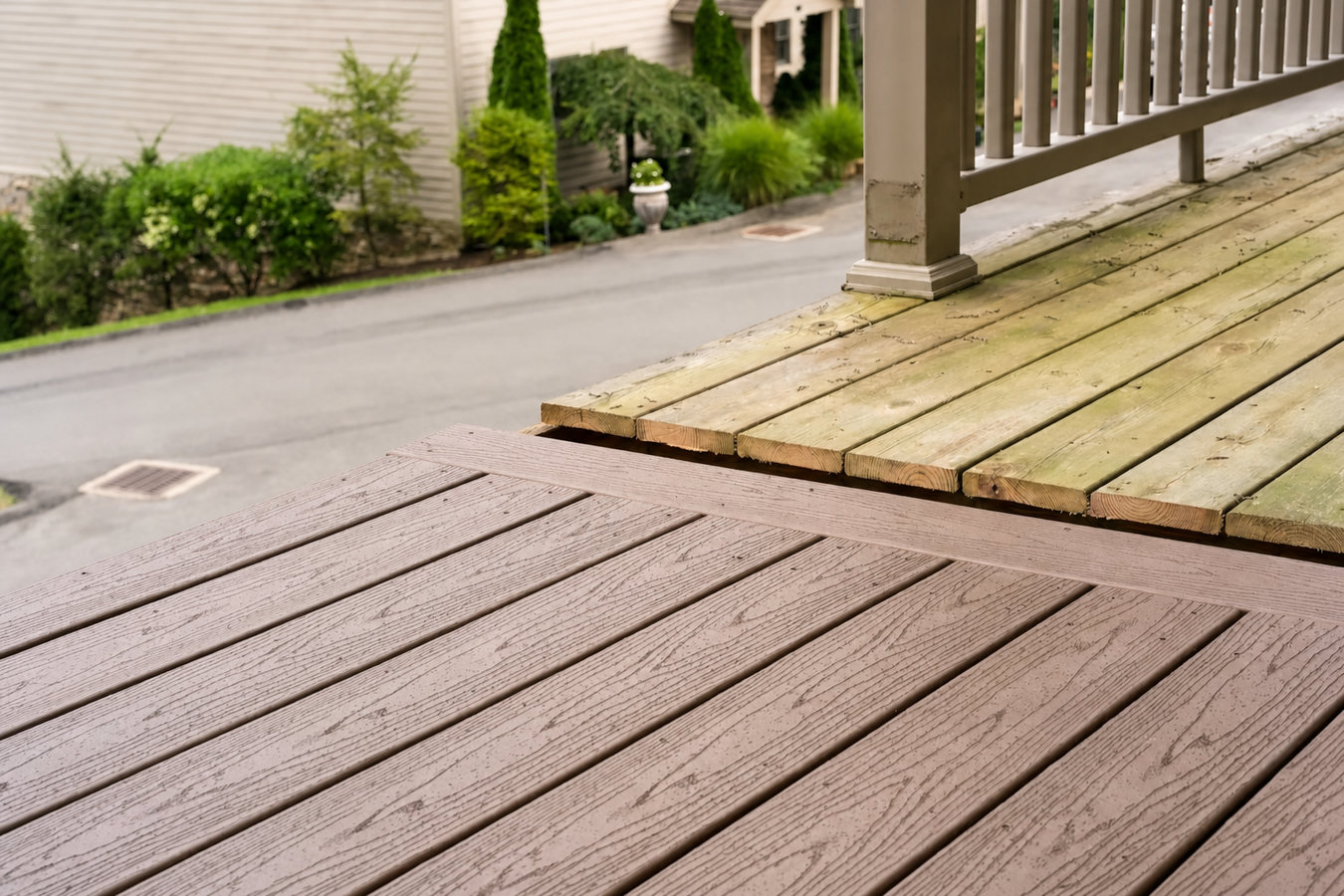
Trex composite decking never needs staining, sealing, or sanding. We install Trex decks in Moreno Valley on properly framed structures, fully permitted and built for Inland Empire heat.
Trex deck installation in Moreno Valley means building a permitted, inspected outdoor structure using composite boards made from recycled wood fibers and plastic - material that holds up against Inland Empire heat and UV without the annual maintenance that wood demands. Most installations take three to seven days of active construction once the permit is approved, with the full project timeline running four to eight weeks from first call to final inspection.
Unlike wood, Trex does not splinter, crack, or gray over time. It carries a 25-year residential warranty against fading and structural defects - a warranty that transfers to the next owner if you sell. For homeowners tired of resanding and resealing every summer, composite decking removes that chore entirely. If you are weighing Trex against a traditional wood option, pressure-treated wood deck construction covers what a frame-forward wood build involves and where that choice makes sense.
The structural frame under a Trex deck is typically pressure-treated lumber - posts, beams, and joists that carry the weight and set the level of the finished surface. That frame matters as much as the composite boards on top. We size footings for Moreno Valley's expansive clay soils, use outdoor-rated hardware throughout, and space the joists correctly so the Trex boards lie flat and drain properly after rain.
If you are sanding, staining, or sealing your deck every year - and still seeing cracks, splinters, or gray weathering - the material is working against Moreno Valley's climate. Wood decks deteriorate faster here than on the coast due to intense UV and heat. Switching to Trex replaces that maintenance cycle with an occasional rinse from the garden hose.
Deck boards that flex underfoot, show deep cracks along the grain, or splinter when you walk barefoot are beyond what staining and sealing can fix. In Moreno Valley's dry, high-UV climate, wood reaches this point faster than in cooler areas. When surface damage is widespread, replacing the boards with composite is often more cost-effective than patching piece by piece.
Many Moreno Valley homes built in the 1990s and 2000s have large backyards with nothing but concrete or bare dirt. If your family avoids the backyard because there is nowhere comfortable to gather, a Trex deck changes that. With Moreno Valley's mild winters and long outdoor season, a well-placed deck adds usable living space for most of the year.
If your existing deck gets so hot in afternoon sun that you cannot walk on it barefoot, the material is not suited to Moreno Valley's conditions. Newer Trex product lines are designed to manage heat better than older composites and most wood species. Choosing the right color and line makes the difference between a surface you avoid in July and one your family actually uses.
A tired, weathered deck is one of the first things a buyer notices during a showing. In Moreno Valley's active resale market, a clean composite surface signals the home has been well maintained. Replacing a worn wood deck before listing improves curb appeal and removes a common negotiating point for buyers.
Every project starts with a free on-site visit to measure your yard, assess ground conditions, and walk through size, layout, and Trex product line options. We handle the permit application with the City of Moreno Valley, build the structural frame with footings dug to the depth local clay soil conditions require, and install the composite boards using hidden fasteners where the design calls for it. Stairs, railings, and fascia boards are part of the build - not add-ons priced separately after you have agreed to a number. For homeowners considering composite options beyond the Trex product family, our composite deck installation service covers the full range of composite materials and what each involves.
After the build, we walk you through the minimal maintenance routine - how often to rinse the surface, what to watch for after wildfire smoke seasons when fine ash settles into the board grooves, and how to register the Trex warranty. Composite decking rewards much less effort than wood, and we make sure you leave with a clear picture of what that actually looks like in Moreno Valley's conditions.
For homeowners replacing a concrete slab or building a first deck close to grade - simple to permit and cost-effective for flat or gently sloping yards.
For homes where the deck needs to be raised above yard level, with stair access and code-compliant composite or metal railings built into the design.
When the structural frame is solid but the surface boards are worn, we remove the old decking and install fresh Trex boards - a faster project than a full rebuild.
For homes with no existing structure, or where the current frame is too compromised to reuse - built new from concrete footings to finished composite surface.
For homeowners who want shade integrated into the design from the start - a pergola can be framed as part of the original deck layout rather than added later.
For yards with a slope or grade change that calls for two connected deck levels at different heights, each framed and surfaced with Trex composite boards.
Moreno Valley's Inland Empire location means sustained summer temperatures above 100 degrees and intense UV exposure year-round. That combination is genuinely hard on outdoor wood - it dries boards out, causes surface cracking, and fades any finish faster than coastal California conditions. Composite decking handles this environment differently: it does not absorb moisture, it does not rot, and it does not need protective coatings to stay structurally sound. Selecting a lighter-colored Trex board also reduces surface heat absorption, which matters when you want the deck to be comfortable in the afternoon hours. Homeowners in neighboring Riverside and Perris face the same climate conditions and reach the same conclusion: composite outperforms wood for longevity in this region with far less ongoing effort.
Moreno Valley's clay-heavy soils add another consideration specific to this area. The ground expands when wet and contracts when dry - a seasonal movement cycle that can shift concrete footings over time if they are not set deep enough. We account for this when digging footings for every deck we build here, which is the step that determines whether the surface stays level and the railings stay plumb years down the road. The Trex Company publishes product guides covering heat performance, cleaning, and warranty terms - useful reading before you finalize your product line selection.
We respond within one business day. A short conversation covers what you are looking for, which Trex product lines interest you, and when you want to get started. We then schedule a free on-site visit at a time that works for your schedule.
We visit your yard, take measurements, check ground conditions, and walk you through Trex product line and color options suited to Moreno Valley's climate. A written estimate follows within a few days - itemized so you can see exactly what you are paying for, with labor, materials, and permit fees broken out separately.
Once you approve the estimate, we submit the permit application to the City of Moreno Valley. If your neighborhood has an HOA, we prepare the architectural review documentation at the same time. This step typically takes one to three weeks - longer if HOA review is required - and we keep you updated throughout.
With permits approved, the crew sets footings, builds the pressure-treated frame, and installs the Trex surface, stairs, and railings. A city inspector reviews the framing before composite boards go on. We finish with a walkthrough covering your cleaning routine and warranty registration.
Free on-site estimate. We handle the permit and HOA paperwork. No obligation.
(909) 546-5539Managing the City of Moreno Valley permit process and your HOA's architectural review at the same time is one of the most stressful parts of a deck project. We submit both applications, coordinate inspections, and get written approvals in place before a board goes down - so you are not making calls to city offices or HOA boards on your own.
We size and depth footings specifically for Moreno Valley's expansive clay soils - not to a generic minimum. That means the frame stays level and the composite surface stays flat through the seasonal ground movement the area sees. A frame that accounts for local soil conditions from day one is what keeps the deck looking right five years later.
We help you choose a Trex product line and board color suited to Moreno Valley's sustained heat. Lighter colors absorb less heat, and Trex's higher-tier lines include materials rated for high-UV climates. That conversation happens before you commit to anything - not after the boards are already ordered.
A city inspector reviews the structural frame before any Trex surface goes on - an independent check that has nothing to do with us. Every permitted job we do goes through this inspection, which means you have official confirmation the structure is sound before the finished deck covers it.
We check the ground conditions, access, and any drainage issues before pricing the job. If something will affect the cost or timeline - expansive soil requiring deeper footings, a difficult access gate, a slope that needs grading - you hear about it in the written estimate, not as a surprise when the crew is already on site.
Every Trex deck we build goes through the city permit and inspection process, and every homeowner leaves with a clear picture of the minimal maintenance the surface actually needs. That combination - local knowledge, a frame built for the soil, proper permits, and a real handoff - is what separates a deck that performs well for decades from one you are repairing within a few years. Verify any contractor you consider on the California Contractors State License Board website before signing anything.
The pressure-treated lumber frame is what every Trex deck sits on - this service covers builds where structural wood is the primary material choice rather than the composite surface.
Learn MoreFor homeowners exploring composite decking options beyond the Trex product family, this service covers the full range of composite materials and what each involves.
Learn MorePermit slots in Moreno Valley fill up fast in spring - reach out now to get your project on the schedule before the heat does.