Serving Moreno Valley, CA and surrounding areas. (909) 546-5539
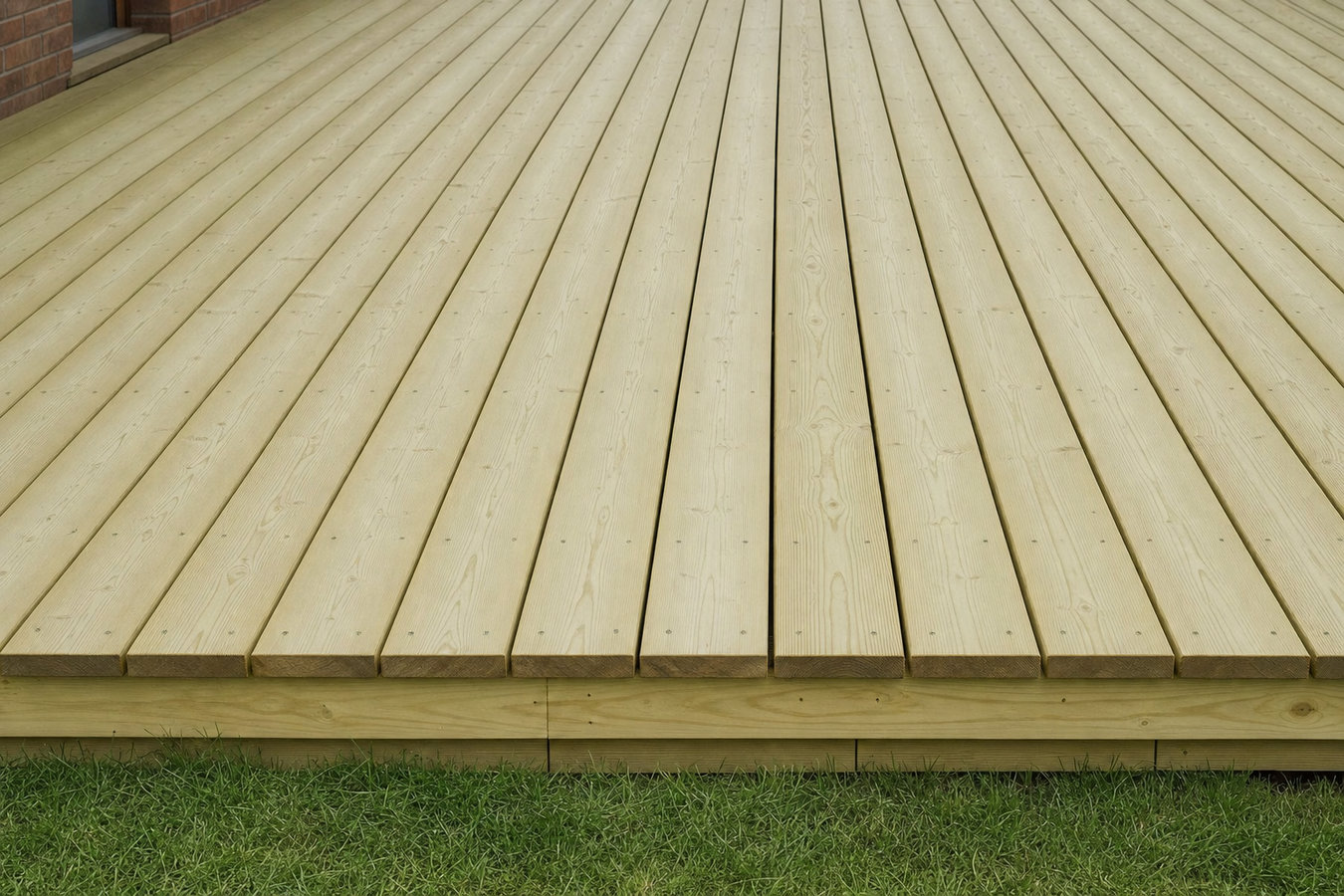
Pressure-treated wood is the most reliable choice for outdoor deck framing - and a sound option for the surface too. We build PT wood decks in Moreno Valley that are properly permitted, framed for local soil conditions, and built to hold up in Inland Empire heat.
Pressure-treated wood deck construction means building an outdoor deck using lumber that has been chemically treated under pressure to resist rot, moisture, and insect damage. Almost every deck built in California - regardless of what material covers the surface - uses pressure-treated lumber for the frame: the posts, beams, and joists that carry the load. A pressure-treated wood deck takes that same material one step further, using PT boards for the surface too.
In Moreno Valley, every deck project that is attached to the home or elevated more than 30 inches requires a building permit from the city. That permit requires a plan review and at least one city inspection before the surface goes down. We handle both the permit application and the inspection coordination from start to finish - you do not need to make calls to the building department on your own.
If you are weighing pressure-treated wood against a low-maintenance composite option, our Trex deck installation and composite deck installation pages cover what each of those choices involves. For many Moreno Valley homeowners, a PT wood deck is still the right decision - especially when upfront cost, repairability, and a classic wood appearance matter more than eliminating the annual maintenance routine.
Many Moreno Valley homes built in the late 1990s and 2000s have large backyards with nothing but dirt or a small concrete pad. A ground-level pressure-treated wood deck is typically the most cost-effective way to create a real outdoor living area - lower in upfront cost than composite and a good match for homeowners willing to keep up with the maintenance routine.
If your current deck has soft spots underfoot, posts that flex or wobble, or visible rot at the post bases, repairs often cost nearly as much as a full rebuild. A new pressure-treated deck built from fresh footings eliminates the patchwork problem and gives you a clean city permit record - useful at resale.
Pressure-treated wood boards can be sanded, stained, and refinished. If you want to change the look of the surface years from now, that is straightforward with wood in a way it is not with composite. Homeowners who value the ability to adapt the surface down the road often prefer PT wood for this reason.
Materials cost less than composite per square foot, and installation labor is similar. For a homeowner on a clear budget who plans to stay on top of annual sealing, pressure-treated wood delivers a durable, attractive deck without the premium composite pricing.
When composite or cedar boards need to come off an existing deck for frame replacement, new pressure-treated lumber for posts, beams, and joists is the correct structural material regardless of what surface goes back on top. We build the structural work for any deck style with properly graded PT lumber.
Every project starts with a free on-site visit: we measure the yard, check the ground and drainage conditions, and walk through size, layout, and design options. The written estimate breaks out labor, materials, and permit fees separately so you are comparing the same scope when you get multiple bids. We handle the permit application, schedule the city inspection, and do not start surface work until the inspector has cleared the frame. If your neighborhood has an HOA, we prepare the architectural review submission at the same time as the city permit. For homeowners whose deck also needs staining or sealing after the build, our deck staining and sealing service covers what that maintenance process involves.
For flat or gently sloping yards where the deck sits close to grade - the simplest and most cost-effective option to permit and build.
For homes where the deck needs to be raised above yard level, with code-compliant stair access and railing built to city specifications.
For homeowners who want a low-maintenance composite or premium cedar surface above a solid pressure-treated structural frame.
For homes where the existing frame is too compromised to reuse - complete teardown and rebuild from concrete footings to finished surface boards.
When the surface boards are in good condition but the frame has rotted or shifted - the structural work is rebuilt while the deck boards are saved and reinstalled.
For sloped yards calling for two connected levels at different heights - each framed with pressure-treated lumber and surfaced with wood or composite boards.
Moreno Valley's combination of intense UV exposure and temperatures that regularly exceed 100 degrees in summer puts outdoor wood under real stress. Unprotected pressure-treated wood will gray, crack, and splinter within two to three seasons here - faster than it would in coastal or northern California. That does not mean PT wood is the wrong choice; it means the maintenance step cannot be skipped. The wood needs to be sealed with a UV-rated exterior stain or sealer before it sees its first full summer, and resealed every one to two years after that. Homeowners in Riverside and Perris face the same UV and heat conditions - the maintenance routine is identical across the Inland Empire.
Moreno Valley's soils add a separate consideration. Much of the area sits on expansive clay soils that swell when wet and contract during the dry season. Footings that are not sized and dug deep enough for this soil type will shift over time, causing the frame to rack and the surface boards to gap or buckle. We account for local soil conditions when sizing footings on every project here - the city inspection process provides a check on this work before the concrete is poured.
For current product information on pressure-treated lumber grading and treatment standards, the American Wood Protection Association publishes the treatment standards that govern what lumber is appropriate for ground-contact versus above-ground use in residential construction. Using the right grade for each part of the frame - particularly for posts that make contact with soil or concrete - is a basic quality standard that distinguishes sound construction from shortcuts.
We respond within one business day. A short call covers your yard size, the type of deck you have in mind, and any concerns about your HOA or existing permits. We then schedule a free on-site visit.
We visit your yard, take measurements, and assess the ground conditions and drainage. A written estimate follows within a few days - itemized with labor, materials, and permit fees broken out. That detail lets you compare bids on the same scope of work.
Once you approve the estimate, we submit the building permit application to the City of Moreno Valley. If your neighborhood requires HOA architectural review, we prepare and submit that documentation at the same time. Permit review typically takes one to three weeks.
With the permit in hand, the crew sets footings, builds the frame, and installs surface boards, stairs, and railing. A city inspector reviews the frame before decking goes on. After the final inspection we walk you through the sealing schedule and any HOA compliance documentation.
Free on-site estimate. Permits and HOA submissions handled. No obligation.
(909) 546-5539We submit the building permit application and, when needed, the HOA architectural review at the same time. You are not coordinating two separate approval timelines on your own. We track both and keep you informed so there are no surprises on your start date.
We dig and size footings specifically for the expansive clay conditions Moreno Valley's soils produce - not to a generic minimum. Footings sized for the actual ground conditions here are what keep the frame level and the surface boards flat through years of seasonal soil movement.
We walk every customer through the maintenance schedule for a pressure-treated deck in this specific climate - how soon to seal before the first summer, what products hold up against Moreno Valley's UV intensity, and how often to reseal. Skipping this step is the primary reason PT decks fail early here.
Every permitted job gets an independent city inspection after the frame is built - before any surface boards go down and cover the structural work. That inspection is the official confirmation the framing meets building code. We do not proceed to surface work until that sign-off is in hand.
The written estimate breaks out labor, materials, and permit fees separately. If ground conditions or site access will affect cost, we tell you before you sign - not after the crew is on site. You know the full scope before any agreement is made.
Verify any deck contractor you are considering with the California Contractors State License Board before signing anything. Any contractor doing construction work for $500 or more in California must hold an active CSLB license - looking it up takes 30 seconds and confirms the license is current, the type of work they are licensed for, and whether any complaints have been filed.
Pressure-treated wood needs to be sealed before its first summer in Moreno Valley's UV environment and resealed every one to two years. This service covers the full maintenance process.
Learn MoreFor homeowners who want a zero-maintenance composite surface instead of pressure-treated wood boards - a Trex deck sits on the same type of PT lumber frame underneath.
Learn MoreCedar offers natural rot resistance and a premium appearance without chemical treatment. This service covers how cedar compares to pressure-treated wood and where the choice makes sense.
Learn MoreCity permit slots fill up in spring. Contact us now to get your project into the schedule before the heat arrives.