Serving Moreno Valley, CA and surrounding areas. (909) 546-5539
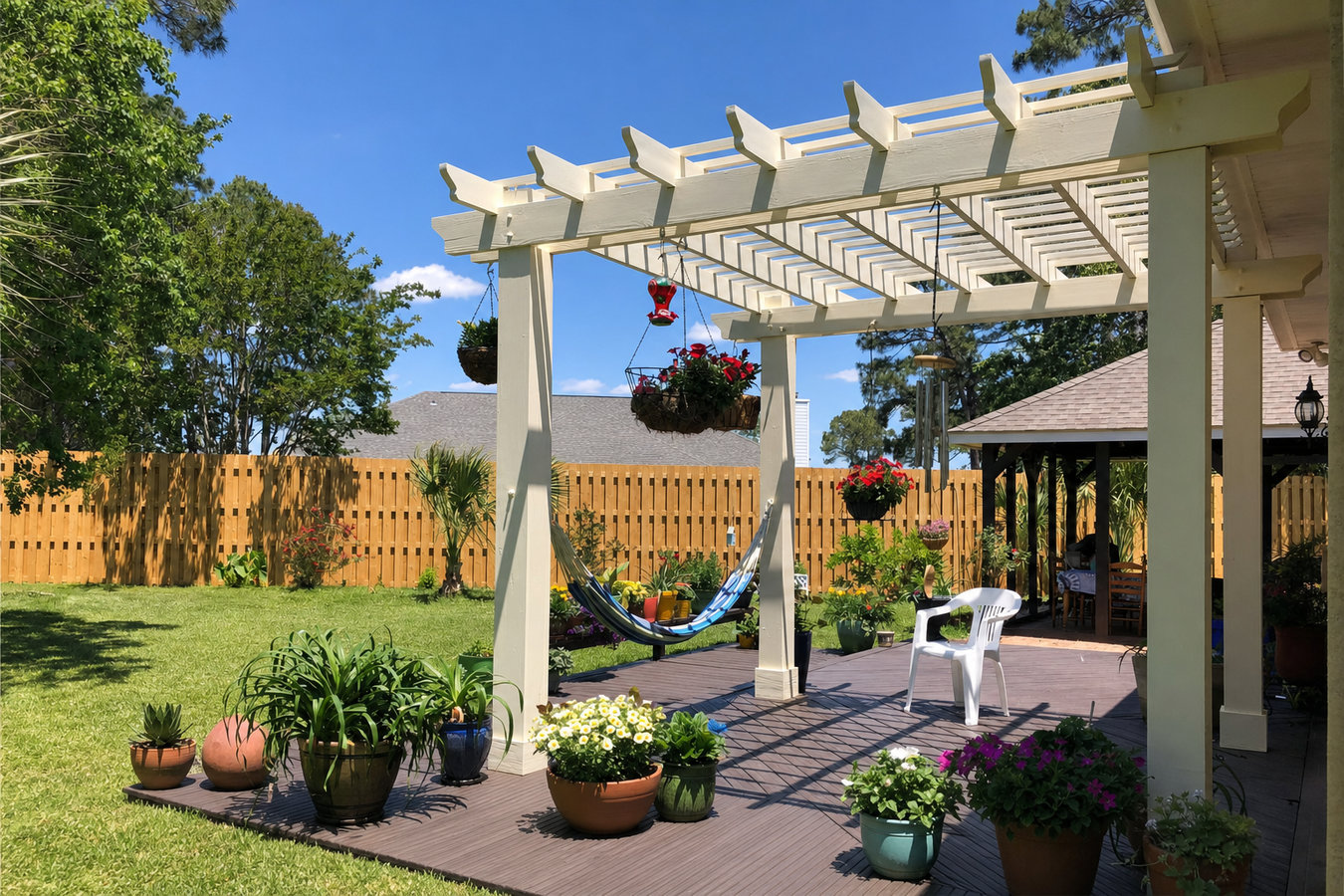
An unshaded backyard in Moreno Valley is unusable for months. A properly anchored pergola gives you a defined outdoor space that holds up through summer heat and Santa Ana winds.
Pergola installation in Moreno Valley creates an open-beam overhead structure that defines your outdoor space and reduces direct sun exposure, with most residential installations completed in one to three days of active construction after permits are approved.
Unlike a full patio cover with a solid roof, a pergola filters light rather than blocking it completely - which makes it a popular choice for homeowners who want a shaded gathering space without fully enclosing their yard. Many homeowners combine a pergola with a covered deck or solid patio cover when they want full shade in one part of the yard and an open, decorated structure in another.
Every pergola we install in Moreno Valley is built with post footings anchored for local clay soil conditions, connections sized for Inland Empire wind loads, and materials selected to hold up in sustained 100-degree heat - not just to look good on installation day.
If your outdoor space sits empty all summer because the sun makes it unbearable, your yard is not working for you. Moreno Valley's summers are intense enough that an unshaded concrete patio can reach extreme surface temperatures by mid-morning. A pergola with a shade sail, retractable canopy, or climbing vines overhead creates a cooler zone that makes the space worth using again.
Many Moreno Valley homes were built with a concrete slab out back and no structure above it - a common builder shortcut. If your slab is in good shape but you have never used it comfortably in summer, adding a pergola is a cost-effective way to give the space purpose without demolishing and rebuilding anything.
Cushions, furniture frames, and outdoor rugs that degrade fast are a sign the space is taking a beating from direct Inland Empire UV exposure. A pergola reduces the intensity of light hitting your furniture and extends the life of everything underneath it - which can offset a significant portion of the structure's cost over time.
If your backyard feels like an empty lot rather than a place to relax, it is often because there is no structure to anchor the space. A pergola creates a visual focal point and a sense of enclosure without putting up walls - it gives the yard a room without boxing it in, and it makes the overall property feel more intentional to guests and future buyers.
We build attached and freestanding pergolas across Moreno Valley using wood, aluminum, and composite materials. Attached pergolas are bolted to your home via a properly flashed ledger board - not surface-mounted to stucco - so the connection stays watertight and the structure stays plumb over time. Freestanding pergolas are anchored with concrete footings dug to a depth appropriate for local soil conditions, which matters in neighborhoods where the clay expands and contracts significantly through the year. We manage the permit process with Moreno Valley's Building and Safety Division and provide the drawings and specifications your HOA needs for architectural review.
Homeowners who want both shade and weather protection often combine a pergola with an outdoor kitchen deck, creating a full outdoor entertaining space under a single structure. Others add a covered deck or solid patio roof alongside the pergola when they need a fully weather-sealed section of the yard.
Best for homeowners who want a natural look and are willing to maintain it with sealing or staining every two to three years to hold up in Moreno Valley's dry heat.
Best for homeowners who want a low-maintenance structure that resists UV fading, heat warping, and corrosion without any recurring upkeep.
Best for homeowners who want a covered structure over a specific area of the yard - a seating area, a garden path, or a pool deck - without attaching anything to the house.
Best for homeowners who want the look of an open pergola but need more sun coverage, using a retractable canopy, shade sail, or climbing-plant trellis to increase shade density.
Moreno Valley regularly sees summer highs above 100 degrees, and the Inland Empire's UV intensity is hard on outdoor materials that were not designed for it. Untreated wood that holds up fine in a coastal city can crack, fade, and warp within a season or two in this climate. The right material choice - and the right sealant schedule for wood options - makes the difference between a pergola that looks good for years and one that starts failing in the first summer. We also design every overhead element to handle the lateral wind loads that come with Santa Ana events, which push gusts to 50 mph and higher across the Inland Empire. Homeowners in Moreno Valley and the surrounding area face these conditions every year, and a pergola that was not built for them is a liability waiting to happen.
Much of Moreno Valley sits on expansive clay soils that shift with seasonal moisture changes. Post footings that are not dug deep enough or filled with enough concrete can start leaning within a few years as the soil moves. This is one of the most common reasons pergolas fail prematurely in the Inland Empire - and it is one of the first things we check when reviewing a competitor's proposal on your behalf. We also navigate the HOA approval requirements that govern many neighborhoods, including communities in Riverside and throughout the region, where exterior structure rules can affect design before the first permit is filed.
We respond within one business day. We will ask a few upfront questions - roughly how big your space is, whether you want an attached or freestanding structure, and whether your neighborhood has an HOA - so we arrive at your home ready with realistic options and a ballpark range.
We come to your yard, measure the space, look at where the sun hits, and check for irrigation lines and overhead utilities near the footprint. You leave with a written proposal that breaks down materials, labor, and permit fees - no verbal-only quotes.
If your neighborhood has an HOA, we prepare the drawings and specs they need for their architectural review committee - typically a two-to-four-week wait. Once HOA approval is in hand, we submit the city permit application. Permit review for a residential pergola typically takes one to three weeks in Moreno Valley.
Most pergola installations take one to three days. We start by marking and digging the footings, pour concrete, and let it cure before standing the posts. Beams and rafters follow. Once the work is complete, a city inspector signs off on the finished structure - we handle the scheduling. You get a walkthrough, care instructions, and warranty documentation before we leave.
Free written estimate. No pressure. We handle the permit and HOA paperwork for you.
(909) 546-5539Moreno Valley's clay soils expand and contract with seasonal moisture changes, and footings that are not deep or wide enough will shift over time. We size every footing for local soil conditions - not a one-size-fits-all spec sheet - so the posts stay plumb through years of summer heat and winter rain.
Santa Ana events regularly push gusts above 50 mph across the Inland Empire. We design every connection point - post anchors, beam-to-post hardware, ledger attachment - to handle lateral wind loads specific to this region. A pergola that was not engineered for local wind conditions is a liability before the first wind season is over.
Navigating Moreno Valley's Building and Safety Division and your HOA's architectural review committee at the same time is more work than most homeowners expect. We manage both processes on every project - the drawings, the applications, the inspector scheduling, and the HOA submission - so you do not have to make a single call to the city or your association.
One of the most common complaints homeowners have about contractors is a price that climbs after work starts. Every estimate we provide is written and itemized - materials, labor, permit fees, and any site-specific conditions we identified during the visit. You know the full number before you commit to anything. The CSLB recommends verifying your contractor license at cslb.ca.gov before signing any contract.
Every pergola we build in Moreno Valley reflects the same approach: footings and hardware sized for local conditions, a permit process handled from start to finish, and materials chosen to last in this specific climate. That combination is what separates a pergola that is still standing straight in ten years from one that starts leaning after the first wet winter.
Combine your pergola with a permanent outdoor kitchen deck for a complete entertaining space built and permitted as one project.
Learn MoreA solid-roof patio cover delivers full weather protection where a pergola leaves openings - ideal for the section of your yard that needs complete shade.
Learn MoreMoreno Valley's permit process takes time - reaching out now means your pergola is ready before the hottest months arrive. Call or request a free estimate today.