Serving Moreno Valley, CA and surrounding areas. (909) 546-5539
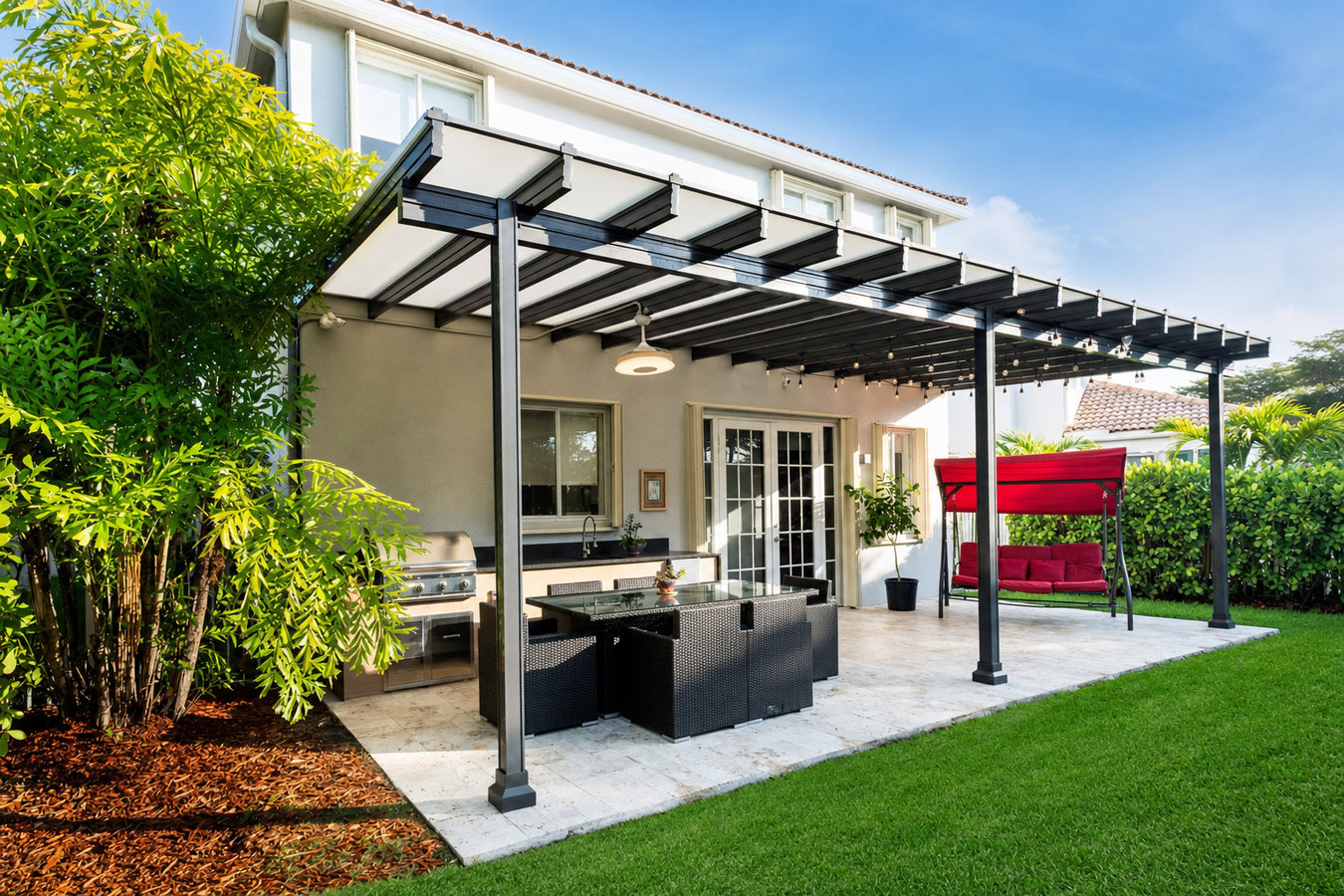
Moreno Valley heat makes uncovered patios unusable for months at a time. A properly built covered deck or patio cover gives you a shaded outdoor room your family can actually enjoy.
Covered decks and patio covers in Moreno Valley are permanent roof-like structures attached to your home that shade your outdoor space, with most installations taking two to five days of active construction after city permits are approved.
If you have a concrete slab or an existing deck that nobody uses because the sun makes it unbearable, a patio cover is the most direct way to activate that space. Many homeowners in Moreno Valley combine a covered patio with a screened-in enclosure for a shaded, bug-free outdoor room that is comfortable even on the hottest evenings.
Every covered deck and patio cover we build in Moreno Valley is fully permitted through the city, anchored into the structural framing of your home, and built to the structural standards required for Southern California's seismic and wind conditions.
If you walk outside on a summer afternoon and immediately head back in, your outdoor space is not working for you. In Moreno Valley, where temperatures regularly push above 100 degrees, an uncovered patio is essentially unusable during the hottest months. A solid-roof cover creates a shaded zone where the temperature is genuinely comfortable, even on evenings when the sun is still up.
A gap forming between your patio cover and the wall of your home, or wood that is soft and crumbling at the connection point, means the cover is failing where it matters most. This is a structural safety issue - a cover that is not properly anchored can come down during a Santa Ana wind event. If the connection is failing, the whole cover typically needs to be rebuilt rather than patched.
Cushions that fade in a single summer, furniture frames that corrode quickly, and outdoor rugs that fall apart fast are all signs your patio is taking a beating from direct Inland Empire sun. A solid-roof cover dramatically extends the life of everything underneath it, which means the cover often pays for itself sooner than homeowners expect.
Many Moreno Valley homes were built with a concrete patio slab and no cover - a common cost-cutting move by original builders. If your slab is in good shape but you have never been able to use it comfortably, adding a cover is the most direct way to turn that slab into a usable outdoor room without a major renovation.
We build attached and freestanding patio covers across Moreno Valley, working with wood framing, aluminum systems, and solid or lattice roof panels. Every attached cover is bolted through to the structural framing of your home - not just to the stucco surface - and the connection point is properly flashed and sealed so water cannot get behind your siding. We handle the full permit process with Moreno Valley's Building and Safety Division and provide the drawings needed for HOA architectural review.
Homeowners who want to add more character to their covered outdoor space often combine a patio cover with pergola installation, using the pergola as a decorative element alongside or in place of a solid roof. Others extend their project to include screened-in porches and screened decks for full insect and dust protection along with shade.
Best for homeowners who want maximum shade and rain protection. Solid panels - aluminum or wood - block direct sun and keep the space underneath noticeably cooler.
Best for homeowners who prefer a more open, airy feel with partial shade. Lattice lets filtered light through and works well as a decorative addition to an existing patio.
Best for homeowners adding a new deck platform and roof structure together, creating a covered outdoor room built from the ground up.
Best for homeowners who want a covered structure over a slab or grassy area that is not attached to the house, with posts anchored into their own concrete footings.
Moreno Valley regularly sees summer temperatures above 100 degrees, with heat waves pushing well past 110 degrees. A solid-roof cover can reduce surface temperatures on an uncovered patio by a significant margin, turning a space you avoid into one you use every evening. The city also sits in an active seismic zone, which means patio covers here must be built to handle lateral forces from earthquakes - not just the downward weight of the roof. And portions of Moreno Valley sit on clay-heavy soils that expand when wet and shrink when dry, which affects how footings need to be sized for freestanding covers. Homeowners in Moreno Valley deal with all of these conditions at once, and the cover needs to be designed with each one in mind.
Many Moreno Valley neighborhoods - including Sunnymead Ranch, TownGate, and Rancho Belago - have HOA rules that govern exterior additions. HOA approval is separate from the city permit, and both need to happen before construction starts. We handle both processes on every project. Homeowners in Perris and the broader Inland Empire face similar climate and permitting conditions, and we regularly build covered structures throughout the region.
We respond within one business day. We will ask a few questions upfront - roughly how big your space is, whether you want the cover attached to the house or freestanding, and whether your neighborhood has an HOA - so we arrive at your home ready to give you a realistic estimate.
We come to your home, measure the space, check how your house is built, and walk you through your options - solid roof versus lattice, aluminum versus wood, attached versus freestanding. A written estimate follows within a few days. We never give verbal-only quotes.
After you sign a contract, we submit the permit application to Moreno Valley's Building and Safety Division and provide drawings for any HOA architectural review. This step typically takes two to six weeks, and we keep you updated throughout.
Most installations take two to five days of active work. A city inspector visits to verify framing before the roof is closed in. After construction, we walk you through the finished cover and make sure you have a copy of the final permit sign-off - the document that proves the work was done correctly.
Spring slots fill fast in Moreno Valley. Call or submit a request today and we will get back to you within one business day with a free written estimate.
(909) 546-5539Every attached cover we build is anchored through to the structural framing of your home, and the connection point is flashed and sealed so water cannot get behind your siding. A cover that is only attached to the stucco surface will eventually pull away - and it typically fails during a wind event, not on a calm day.
Southern California's earthquake risk and fall wind events mean patio covers here need to handle lateral forces, not just downward weight. We size our connections and anchor hardware to local structural requirements. Contractors who are new to the Inland Empire may not build to these standards - we do, on every project.
We handle every step of the Moreno Valley permit process and submit HOA architectural review drawings when needed. Many HOA communities in Moreno Valley have specific requirements about cover dimensions, materials, and color. We know those requirements and design to meet them from the start, which means fewer rounds of revisions and a faster path to approval.
We have been building covered decks and patio covers in Moreno Valley and across the Inland Empire since 2018. Whether you are in an older neighborhood near March Air Reserve Base or a newer street in Rancho Belago, we have worked in your part of town and know what the local permit office and HOA review process looks like.
A covered deck built right for Moreno Valley lasts 20 years or more and holds up through every Santa Ana season. Reach out today for a free written estimate.
For permit requirements and inspection standards in Moreno Valley, visit the Moreno Valley Building and Safety Division. For California contractor license verification, use the California Contractors State License Board. For seismic and structural standards in Southern California, see the California Geological Survey.
Add an open-beam or lattice structure alongside your covered patio for a decorative outdoor element that complements solid-roof coverage.
Learn MoreCombine shade coverage with full screen panels to create an outdoor room that keeps out insects and blowing dust along with the sun.
Learn MoreSpring schedules fill quickly in Moreno Valley. Call today or submit a request online for a free written estimate and we will get back to you within one business day.